Visa Waiver Program
Passport Requirements for Visa Waiver Program - VWP
Those who wish to travel under
the Visa Waiver Program (VWP) must have an appropriate passport that meets
specific requirements. These requirements vary based on when it was issued, renewed, or extended.
The Patriot Act legislated that everyone traveling under the Visa Waiver Program must have a machine readable passport.
If you have any further questions about your passport, you should contact the passport issuing agency of your country.
Most of the countries participating in the Visa Waiver Program already offer the e-Passport. However, some countries give a choice of using either an e-Passport or a regular passport as long they are still producing them.
If anyone has a passport that is not compliant, it will not be confiscated. However, if the passport is made by fraudulent means, it may be confiscated.
If any traveler attempts to enter the United States without a compliant passport, he/she may be denied admission and may be detained pending removal. If you are denied entry under the VWP due to a noncompliant passport, you can still attempt to enter the United States in the future provided you have a compliant passport at that time.
Citizens of Czech Republic, Estonia, Hungary, Latvia, Lithuania, Malta, the Republic of Korea, and Slovakia require e-Passports, as described below.
Passport requirements for citizens of other VWP countries vary depending upon the date it was issued.
The Patriot Act legislated that everyone traveling under the Visa Waiver Program must have a machine readable passport.
If you have any further questions about your passport, you should contact the passport issuing agency of your country.
Most of the countries participating in the Visa Waiver Program already offer the e-Passport. However, some countries give a choice of using either an e-Passport or a regular passport as long they are still producing them.
If anyone has a passport that is not compliant, it will not be confiscated. However, if the passport is made by fraudulent means, it may be confiscated.
If any traveler attempts to enter the United States without a compliant passport, he/she may be denied admission and may be detained pending removal. If you are denied entry under the VWP due to a noncompliant passport, you can still attempt to enter the United States in the future provided you have a compliant passport at that time.
Citizens of Czech Republic, Estonia, Hungary, Latvia, Lithuania, Malta, the Republic of Korea, and Slovakia require e-Passports, as described below.
Passport requirements for citizens of other VWP countries vary depending upon the date it was issued.
e-Passport
Passports issued/renewed/extended on or after October 26, 2006.
|
All passports issued or renewed/extended on or after Oct 26, 2006, must be e-Passports.
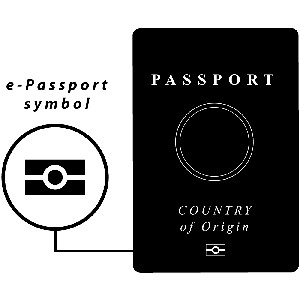
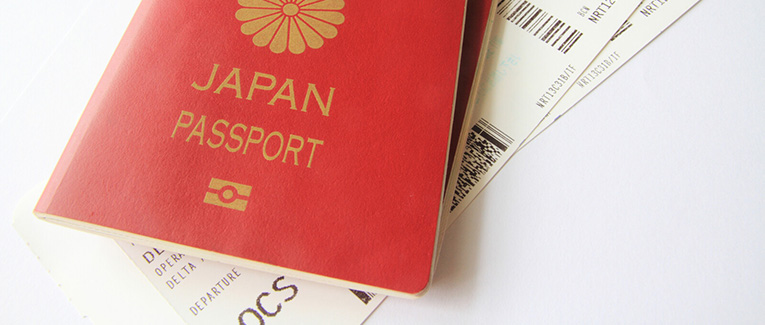
These are also called "smart passports." An e-Passport has an integrated computer chip that holds essentially the same information printed on the passport's biographic data page, such as name, digital photograph of the holder, date of birth, and other biographic information. The e-Passport incorporates data related to an individual's identity and includes facial recognition data. The contours of individuals' faces are digitally mapped and stored on the chip so that a comparison of facial data for the bearer of the passport and the facial data of the person to whom the passport was issued can be made. The e-Passport has an international symbol at the bottom of the front of cover the passport, as shown in the picture on the left. The e-Passport must comply with international technical standards established by the International Civil Aviation Organization (ICAO). If your passport lacks this feature, you can still travel without a visa if you meet any of the passport requirements mentioned in sections "digital photograph" or "machine readable zones." If your passport was issued on or after October 26, 2006, and if it is not an e-Passport, you cannot travel using the Visa Waiver Program. You must first obtain a visa. |
Digital Photograph
Passports issued/renewed/extended between October 26, 2005, and October 25, 2006.
|
If your passport was issued or renewed/extended between October 26, 2005, and October 25, 2006, your passport
must have a digital photo printed on the data page.
A digital photo is printed right on the page; it is not glued or laminated into the passport. Look at the image on the left for an example. Digital photographs provide more security against counterfeiting than traditional photographs made of paper and glued to the passport. Even though it is possible to counterfeit digitally printed photographs, it is much more difficult and expensive compared to traditional photographs. Digital photographs are not affixed to the passport by adhesive and/or laminated; they are electronically printed onto the data page of the passport. A digital photo is an integral part of the data page. Therefore, it is completely smooth to the touch. When you run your finger across it, you feel no aberration of the page or variation of the photo area. If the photo had been affixed to the passport, you would feel a difference. If your passport does not have a digital photograph, you may still be eligible to travel under the Visa Waiver Program if your passport meets either of the requirements mentioned in "machine-readable zone" sections or has an e-Passport. If your passport was issued on or after October 26, 2005, and if it does not have the digital photograph or it is not an e-Passport, you must first obtain a visa. The digital photo requirement do not apply to the Guam Visa Waiver Program. |
Machine-Readable Passport
Passports issued/renewed/extended before October 26, 2005.
|
If your passport was issued or renewed/extended before October 26, 2005, it must have a machine-readable zone.
Machine-readable passports must follow the standards set by the International Civil Aviation Organization (ICAO). ICAO specifies standards regarding passport size, photograph size, arrangement of biographic data fields, and two lines of text as letters, numbers and chevrons (<<<) at the bottom of the data page, along with the passport holder's picture. Machine-readable passports contain data that can be scanned automatically by a special machine. If your passport doesn't have machine-readable zones, you must either get a new passport that meets the requirements or you need to apply for a visa. |
Machine-readable passports, passports with digital photographs, and e-Passports have biographic
data only for one traveler.
Therefore, if any children are added on the parents' passports, they are not eligible to travel under the Visa Waiver Program.
Each traveler (even infants) must obtain his or her own passport as per the requirements mentioned above.
Therefore, if any children are added on the parents' passports, they are not eligible to travel under the Visa Waiver Program.
Each traveler (even infants) must obtain his or her own passport as per the requirements mentioned above.
Emergency Passport Requirements
Effective July 1, 2009, VWP countries' emergency or temporary passports must be electronic passports, including those who are just transiting the U.S. using the VWP program.
U.S. Customs and Border Protection may exercise discretion at the ports of entry for cases in which
VWP applicants traveling for medical or other emergency reasons.