


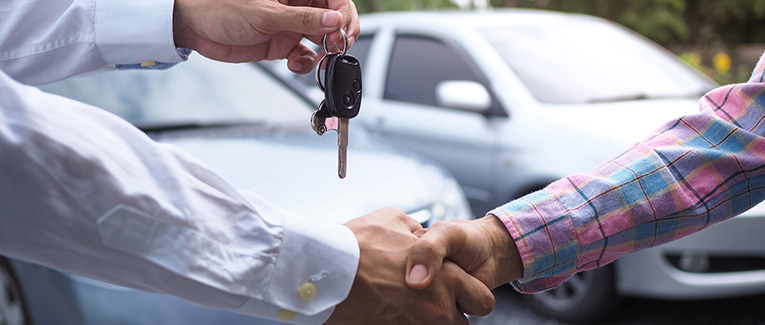
If you can’t get a loan or prefer not to make installment payments, purchasing a used car outright may be a good option. However, when buying a used car, you have to be much more careful than when you buy a new car. In addition to the cost of the car, you will have to consider the cost of unexpected repairs. You may be able to get a better model with lower monthly payments if you buy a used car. Make sure to buy a car you can afford and leave some reserve money for emergencies.
Most used cars don’t come with warranties. Even if the car had warranty, it may not be transferable to new owner. Even if there is warranty, it may not cover the things you need to get repaired.
If you are buying a used car from a dealer for the first time, the salesman may give you a hard time. Lenders generally will not approve car loans for used cars that are older than 5 years.
Finding a Used Car
There are many places where you can find used cars, including UsedCars.com, Edmunds.com, Cars.com, AutoByTel, MSN Autos, or Cars Direct. You can also find used cars on classifieds websites like Craigslist and Sulekha (Indian).
Many local newspapers also advertise cars for sale. Some sellers display a sign on the car itself. It may be a good idea to buy a used car from a rental car company. They usually sell their cars once they reach the age of 2 years, and they generally take good care of the cars. Even though the body might have some minor scratches, those cars are maintained well. They may not want to negotiate the price, and their prices may be a little higher.
After looking at various ads, short-list the cars you’re interested in. Call the seller as early in the day as possible and set up an appointment to look at the car. Make sure to go during the day, as it’s difficult to check out the car in the dark for any existing damages.
After you’ve looked at the car, take a test drive. If you like the car and are fine with the price, you should tell the seller that you would like to have it checked by a mechanic. Don’t take the seller’s words as 100% truthful. There is no reason to feel shy about having the car looked at by a professional. You are making a big purchase decision. This will help you avoid a lot of mechanical problems and save you a lot of money later. Remember, once you buy the car, there is no return or money back. Any pre-existing damages now become your responsibility.
If the seller doesn’t let you test drive (make sure to take your driver’s license with you), you have no reason to buy the car. Also, check their driveway or parking space to see if there are any signs of leaks. Also, check the car’s A/C and heater.
Typically, the best deals will be cars that are two or three years old, as they are still in relatively good condition and most of the depreciation (reduction in the value of the car) has already occurred.
“Certified used car dealers” don’t really mean anything unless you are buying a certified pre-owned BMW, Lexus, or Mercedes and get a 3-year warranty. Never sign papers that indicate the car is “AS IS.”
Mileage
You should consider the current mileage when purchasing a used car. Of course, the fewer miles it has been driven, the better. An average of 12,000 miles per year is considered the norm. Of course, some cars are driven less than that, but many are driven much more due to long commuting distances. For example, a car manufactured in 2002 with a mileage of about 60,000 is considered fine in 2007. If a car has 110,000 miles or more, it is better to avoid purchasing it.
Also, many miles driven on highways are better than many city miles. This is because consistently higher speeds allow the car to run more efficiently on its fuel, allowing higher miles per gallon rates on the highway.
Price
It may be difficult to find the true market value of a used car. Fortunately, there are various tools available to determine this. Kelley’s Blue Book is an excellent place to find used car values. The easiest way is to check online. However, many libraries, bookstores, and other similar places may have it available. It lists car models, year of make, variations, and the current value of the car. Of course, you may want to add or subtract the appropriate amount for features added later or those that do not work. Also, there is a cost deduction for additional mileage driven above the standard mileage. All of this information is mentioned in the Blue Book.
The Blue Book gives a rough idea of a used car’s worth.
If you have a used car checked by a mechanic, they may also be able to tell you the approximate value of the car.
When you have a car checked by a mechanic and they find it needs repairs, ask the seller to either have them fixed or to discount the price of the car by the amount required for the repairs.
You may also be able to negotiate the price of a used car. Often, it is more expensive to buy a used car from a dealer than from a private owner.
Having A Car Checked
Before buying a used car, it is absolutely necessary to first have it checked by a mechanic. Check the local Yellow Pages, search online, or ask a friend or colleague to recommend one. If you are a member of AAA, they can also recommend one. Mechanics may charge you $50 to $100 (it really varies). He/she will check the car thoroughly and tell you the current or potential problems if any.
Even though most mechanics know their job, make sure to have the following things checked:
- All safety features, such as brakes, headlights, indicator lights, horn, and wipers are working correctly.
- Check the brake cylinder and drum to see if there are any worn out pads
- Check the transmission and engine. They are usually the most expensive parts in a car.
- Automatic cars may have either a 4 speed or 5 speed. You should consider buying only a 5-speed car.
- Check to see whether there is any rust at the bottom, exhaust, radiators, and muffler.
- Is there an oil leak? You can easily tell if there are any oil spots where the car was parked.
- Does the car have enough power and pick up when accelerating?
- Apply brakes at around 40mph and check for any vibrations without down-shifting. If there are, either the brake pads or the steering pinion may not be in good shape.
- If possible, have four people sit in the car and take a sharp turn. This is a good way to find out if the suspension is in working order.
- If the emission is black and thick, it means oil is burning with gas and the car is beyond its life. You should strongly consider NOT buying this type of car.
- If the piston rings leave a gap in the cylinders, you shouldn’t buy the car. You will have to change the cylinder, piston, and rings, which is very expensive.
- Ask the seller if they have records of maintenance or other work performed on the car, such as replacing and/or rotating tires, etc.
- Don’t buy the car if it has already been sold to two or three prior sellers. Why is the car changing hands frequently? Is there something seriously wrong with it?
- Check that the air filter, valves, etc., are fine.
- Check to see that the interior is not too worn out. Sellers may just put new floor mats in, which are very cheap to replace. Underneath them, though, there may be worn out carpets.
Vehicle History Report
Before you finally decide to buy a car, check the car’s history with CarFax or AutoCheck. It reveals whether the car has been in any accidents or whether the car was totaled or salvaged. It is not very expensive and is really worth it.
You need a 17-digit VIN (Vehicle Identification Number) located on the metal strip on the dashboard to run the vehicle history. The VIN may also be located in other places, such as the engine, passenger door, driver side door, trunk, or hood. Make sure the VIN matches in every place.
When you buy the car, make sure to collect the title. If the seller doesn’t have the title or promises to give you it later, don’t buy the car. Every car owner must have a title. If the seller still has an outstanding loan on the car, you may go to the lender, pay them they outstanding balance, and they will give you the title right away. Check the seller’s driver’s license and match it with the title to make sure that the seller is really the owner of the car. If the car has any wheel locks, make sure to collect the key from them. Otherwise, you can’t change tires. Remember to collect all the keys, maintenance records, owner’s manuals, and any spare parts the seller may have. If the seller has receipts for batteries or alternators, make sure to collect them as well. Also, buy a pair of good quality jumper cables as soon as possible, just in case the battery dies.